• Cgeldert@shaw.ca
(403) 620-8534
Christopher Geldert, CA
  • HOME
  • ABOUT
    • ABOUT
    • SUPPLIERS
    • RESOURCES
    • PRIVACY & TERMS
  • SERVICES
    • INSURANCE PLANNING
      • LIFE INSURANCE
      • MORTGAGE LIFE INSURANCE
      • DISABILITY INSURANCE
      • CRITICAL ILLNESS INSURANCE
      • HEALTH & DENTAL
    • FAMILIES
      • ESTATE PLANNING
      • ESTATE PLANNING FOR MATURE FAMILIES & RETIREES
      • INSURANCE PLANNING
    • BUSINESS OWNERS
      • INSURANCE PLANNING
      • ESTATE PLANNING
  • CONTACT
  • LATEST NEWS
  • Click to open the search input field Click to open the search input field Search
  • Menu Menu

Getting Ready for Money Emergencies

Blog, Debt, Family, financial advice, Financial Planning, incorporated professionals, individuals, Investment, personal finances, Professionals

brandableContent

Life can throw unexpected events your way that can hit you in the wallet. Whether it’s falling ill, getting laid off, or facing hefty repair bills for your car or home, these situations can strain your finances. To stay ahead and avoid falling into debt, it’s a good idea to have an emergency fund. This is cash you set aside specifically to handle unforeseen expenses, so you’re not left scrambling for money when the unexpected happens.

Why Emergency Funds Matter

An emergency fund is like an insurance policy for unexpected expenses that everyone can benefit from. It’s a stash of money specifically saved to cover daily living costs during emergencies that catch you off guard, such as:

  • Sudden car repairs

  • Vet visits

  • Losing your job

  • Sudden home repairs

  • Medical emergencies

Creating an emergency fund helps you to:

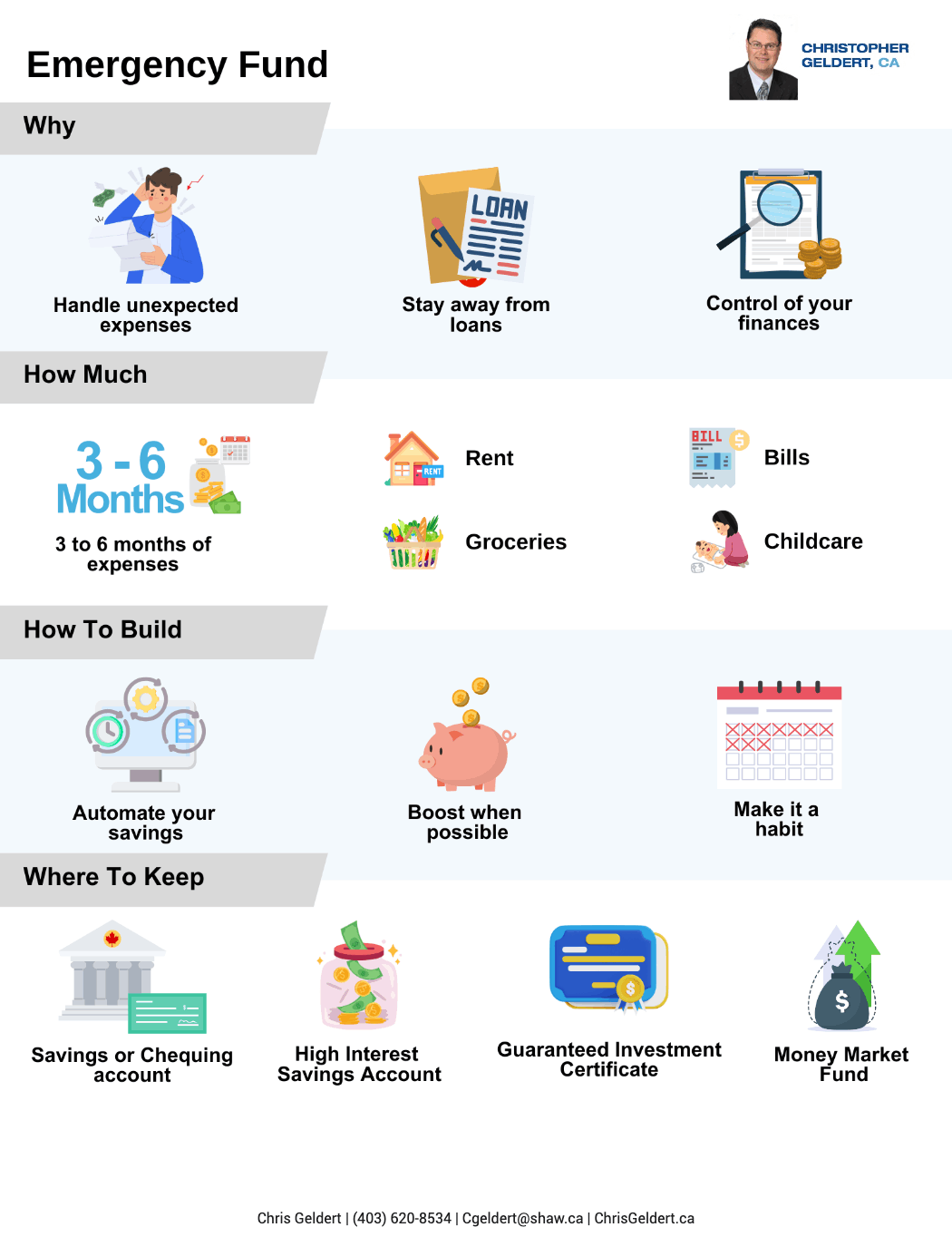
  • Deal with surprise costs without going into debt

  • Stay away from expensive loans like payday loans or credit card cash advances

  • Keep control of your finances

  • Feel less worried about unexpected expenses.

An emergency fund offers peace of mind during life’s surprises, preventing debt by covering costs without needing to use up savings or retirement funds, which could result in extra fees.

How much do you need?

The amount you should save depends on your financial situation, like how much you earn, what you spend each month, and if you have any dependents. A good rule is to have enough money to cover three to six months of necessary expenses, like rent, groceries, bills, and childcare.

How to Build Your Emergency Fund

Building an emergency fund to cover three to six months of essential living expenses might feel overwhelming, but the key is to start saving gradually. Even putting away a small amount regularly can add up significantly over time.

Here are some ways to build up your emergency fund:

  1. Automate your savings: Pick how much money you want to save, when you want to save it, and how often. Then, arrange for the money to be automatically moved from your regular account to your savings account. You can set up this automatic transfer to happen on your payday. That means the money you’ve chosen to save will be moved as soon as your paycheque is put into your account.

  2. Take advantage of opportunities to boost your emergency fund whenever you can. This might happen when you get extra money, like a tax refund, a pay raise at work, or when you sell things such as a car. Even receiving money as a gift or getting a bonus from your job can help. Additionally, when you finish paying off a loan, consider putting the money you used for payments into your emergency fund instead. Since you’re already used to budgeting for those payments, it’s an easy way to increase your savings without much extra effort.

  3. Make it a habit: Make saving a regular part of your routine by incorporating it into your daily habits. Here are some simple tips to help you get started: drop any loose change into a container whenever you come home, set up a savings, mark your saving dates in advance on your calendar, and use sticky notes on your fridge to remind yourself to save regularly. These small actions can make a big difference in building your savings over time.

Where to keep your emergency fund?

Given that emergencies can occur unexpectedly, having quick access to your funds is important. Although a regular chequing account may offer immediate access to your money, it’s best to keep your emergency fund separate from your regular account. This prevents accidental spending on non-emergencies. Look for an account that:

  • Is distinct from your regular spending account

  • Has minimal or no transaction fees

  • Permits penalty-free withdrawals

  • Earns interest on your savings

Consider exploring “cash equivalents” as an option to invest your money. They’re a bit like cash but can also help your money grow with interest. They’re safe and easy to get your money from. But before you decide, make sure you understand how and when you can take your money out and if there are any extra fees or charges. Examples of cash equivalents include:

  • Savings accounts

  • Chequing accounts

  • High-interest rate savings accounts (HISA)

  • Guaranteed Investment Certificates (GIC)

  • Money market funds

Having an emergency fund can be a lifeline during tough financial times, preventing you from falling into debt. While there’s no fixed amount you should stash away, assessing your financial situation can guide you in determining your ideal emergency fund size. If you need assistance in planning your emergency fund, don’t hesitate to reach out to us for personalized guidance and support.

Contact Us

by Chris Geldert
Share this entry
  • Share on Facebook
  • Share on X
  • Share on WhatsApp
  • Share on Pinterest
  • Share on LinkedIn
  • Share on Tumblr
  • Share on Vk
  • Share on Reddit
  • Share by Mail
https://chrisgeldert.ca/wp-content/uploads/2024/07/Getting-Ready-for-Money-Emergencies.png 300 500 Chris Geldert https://chrisgeldert.ca/wp-content/uploads/2020/05/christopherGeldertLogo5.png Chris Geldert2024-07-15 07:01:202024-07-15 07:01:45Getting Ready for Money Emergencies

Pages

  • ABOUT
  • ADVANTAGE ACCOUNT
  • BLOG
  • BUSINESS CONTINUATION
  • BUSINESS SUCCESSION
  • CONTACT
  • CRITICAL ILLNESS INSURANCE
  • CRITICAL ILLNESS INSURANCE
  • DISABILITY INSURANCE
  • DISABILITY INSURANCE
  • EMPLOYEE BENEFITS
  • ESTATE PLANNING
  • Estate Planning for Business Owners
  • Estate Planning for Retirees and Mature Families
  • Estate Planning for Young Families
  • EXECUTIVE BENEFITS
  • Families
  • Farms
  • FINANCIAL ADVICE
  • FINANCIAL ADVICE FOR BUSINESS OWNERS
  • FINANCIAL ADVICE FOR BUSINESS OWNERS
  • FINANCIAL ADVICE FOR SENIORS
  • FLEXCARE, ASSOCIATION, HEALTH AND DENTAL PLANS
  • GROUP BENEFITS
  • GROWING FAMILIES
  • GUARANTEED INVESTMENT CERTIFICATES
  • HOME
  • How will rising interest rates impact Canadians?
  • INDIVIDUAL HEALTH AND DENTAL PLANS
  • Insurance Planning
  • Insurance Planning for Business Owners
  • Insurance Planning for Young Families
  • INVESTMENT PLANNING
  • LATEST NEWS
  • LIFE INSURANCE
  • Life Insurance
  • LIFE STAGES
  • MATURE FAMILIES
  • Mortgage Insurance
  • MORTGAGE LIFE INSURANCE
  • Non Registered Investments
  • Planning for Seniors
  • Preparing for Retirement
  • PRIVACY STATEMENT AND WEBSITE TERMS OF USE
  • REGISTERED DISABILITY SAVINGS PLAN
  • REGISTERED DISABILITY SAVINGS PLAN
  • REGISTERED EDUCATION SAVINGS PLAN
  • REGISTERED EDUCATION SAVINGS PLAN
  • REGISTERED RETIREMENT INCOME FUND
  • REGISTERED RETIREMENT INCOME FUND
  • REGISTERED RETIREMENT SAVINGS PLAN
  • REGISTERED RETIREMENT SAVINGS PLAN
  • Resources
  • RETIREES
  • RETIREMENT PLANNING
  • Retirement Planning for Business Owners
  • Retirement Planning for Employees
  • SERVICES
  • STARTING YOUR CAREER
  • STRATEGIC PARTNERSHIPS
  • SUPPLIERS
  • SUPPLIERS-old
  • TAX FREE SAVING ACCOUNT
  • TAX FREE SAVING ACCOUNT
  • THE NEED FOR CORPORATE LIFE INSURANCE
  • The Need for Corporate Life Insurance
  • THE NEED FOR PERSONAL LIFE INSURANCE
  • The Need for Personal Life Insurance

Categories

  • 2020
  • 2020 Only
  • 2021
  • 2022
  • 2022 Only
  • 2023
  • 2024
  • 2025
  • 2026
  • Accountants
  • Blog
  • Budget
  • Business Owners
  • Business Owners
  • Business Succession
  • Business Succession Planning
  • Buy Sell
  • Center of Influences
  • Charitable Gifting
  • Coronavirus
  • Coronavirus – Associates
  • Coronavirus – Practice Owners
  • Coronavirus – Retired
  • Coronavirus – Retiring
  • Coronavirus – Students
  • corporate
  • Critical Illness Insurance
  • Debt
  • dental benefits
  • disability
  • Disability Insurance
  • Estate Planning
  • Family
  • farmers
  • Finance
  • financial advice
  • Financial Planning
  • Government Budget
  • Group Benefits
  • health benefits
  • incorporated professionals
  • individuals
  • Insurance
  • Investment
  • Life Insurance
  • long term care
  • mortgage
  • Ontario Only
  • pension plan
  • personal finances
  • Professional Corporations
  • Professionals
  • RDSP
  • Registered Education Savings Plan
  • Retirees
  • Retirement
  • RRSP
  • RRSP
  • tax
  • Tax Free Savings Account
  • Travel Insurance

Archive

  • October 2026
  • September 2026
  • August 2026
  • July 2026
  • June 2026
  • May 2026
  • April 2026
  • March 2026
  • February 2026
  • January 2026
  • December 2025
  • November 2025
  • October 2025
  • September 2025
  • August 2025
  • July 2025
  • June 2025
  • May 2025
  • April 2025
  • March 2025
  • February 2025
  • January 2025
  • December 2024
  • November 2024
  • October 2024
  • September 2024
  • August 2024
  • July 2024
  • June 2024
  • May 2024
  • April 2024
  • March 2024
  • February 2024
  • January 2024
  • December 2023
  • November 2023
  • October 2023
  • September 2023
  • August 2023
  • July 2023
  • June 2023
  • May 2023
  • April 2023
  • March 2023
  • February 2023
  • January 2023
  • December 2022
  • November 2022
  • October 2022
  • September 2022
  • August 2022
  • July 2022
  • June 2022
  • May 2022
  • April 2022
  • March 2022
  • February 2022
  • January 2022
  • December 2021
  • November 2021
  • October 2021
  • September 2021
  • August 2021
  • July 2021
  • June 2021
  • May 2021
  • April 2021
  • March 2021
  • February 2021
  • January 2021
  • December 2020
  • November 2020
  • October 2020
  • September 2020
  • August 2020
  • July 2020
  • June 2020
  • May 2020
  • April 2020

Chris Geldert CPA, CA, CLU, CEA

Navigating corporate structures and the insurance world can be difficult. I specialize in assisting business owners protect, realize and transfer the value of their business and corporate wealth. I guide owners through the process and work with their various professionals to ensure solutions implemented properly manage risks and maximize benefits. Above all, I work to earn your business.

Subscribe to my newsletter

* indicates required


Contact Me

Tel: (403) 620-8534

E: Cgeldert@shaw.ca

© 2020 Financial Tech Tools Inc. - Enfold WordPress Theme by Kriesi
Link to: Strategies for Multi-Generational Planning Link to: Strategies for Multi-Generational Planning Strategies for Multi-Generational Planning Link to: Understanding Early CPP: When and Why to Consider It Link to: Understanding Early CPP: When and Why to Consider It Understanding Early CPP: When and Why to Consider It
Scroll to top Scroll to top Scroll to top